“She’s perfect in the garden, but the second another dog comes round the corner, I’ve lost her.” If that’s your walk, you’re in far better company than you think. Recall, loose-lead walking, passing another dog calmly, they all fall apart for the same reason: your dog isn’t looking at you. That’s what the watch command fixes, and it’s why watch command dog training is a good place to start.
Why the watch command is worth teaching first
Think about the last three walks that went wrong. Your dog spotted a spaniel across the field and stopped hearing you. They locked onto a lamppost forty feet ahead and towed you to it. Another dog appeared and they went off like a firework. Different problems on paper. Same moment underneath: your dog’s eyes were somewhere else, and once the eyes go, the ears go with them.
You can’t call back a dog who has stopped listening. You can’t reward a loose lead if your dog doesn’t know you’re on the other end of it. Attention has to come first.
So build it on purpose, with its own cue, rather than hoping it turns up. “Watch” means one thing to your dog: look at my face, something good happens. That’s the whole cue. It’s dull to practise and it does a lot of heavy lifting. If you’ve read our guide to building a reliable recall, this is the step that sits underneath it.
What watch command dog training actually looks like
The mechanic is simpler than most people expect. Get something your dog genuinely cares about: chicken, a lump of cheese, their favourite tuggy. Hold it up near your own face, where they can see it. Then wait.
The moment their eyes flick up to yours, say “watch” and hand over the food straight away. Not two seconds later. The reward has to land while they’re still looking, or you’ve paid your dog for whatever they did next.
That order catches people out. Early on you’re naming something your dog has already done, rather than asking for something they don’t understand yet. As the repetitions add up, many dogs start offering the look before you’ve got the treat up. That’s your cue to start saying “watch” first. Some get there quickly; others take longer.
Keep the sessions tiny. Two minutes, five or six repetitions, then stop while your dog still wants more.
Start in the most boring room in the house
Nobody teaches this at the park. The park is the exam, and you don’t sit the exam before the lessons. Start in your living room with the telly off, nobody coming in and out, and almost nothing better for your dog to look at than you.
Once you’re getting a fast, easy look in there, move one rung up the ladder. The hallway. Then the kitchen while somebody’s cooking. Out in the garden. The garden again while next door’s dog is barking. Then the pavement outside your house at a quiet time. A corner of the park after that, thirty or forty metres back from the paths, on a long line.
Each rung is harder than the last, and the usual rule for recall applies: make one thing harder, make everything else easier. New place? Better treats, shorter sessions, less distance between you. If your dog can’t manage a look somewhere new, you haven’t gone backwards. You’ve just found the level they’re at. Drop down a rung and build from there.
Building from one second to thirty
At first you’re rewarding a flicker of eye contact, and that’s exactly right. The next job is holding it, and you do that with the reward itself rather than by making your dog wait.
Instead of one treat handed over in one go, feed slowly. Break a bit of chicken into three and deliver it a piece at a time while your dog keeps looking. Or keep the tug going a few seconds longer. Your dog works out that the look is what keeps the good thing coming, so the look lasts.
From there, count in your head. Get comfortable at two or three seconds before you try five. When five is easy in the living room, go for ten. Thirty seconds of steady eye contact is genuinely impressive, and it’s built over many short sessions rather than in one go. Build in small jumps and drop back whenever it wobbles. A dog who wins nine times out of ten stays keen; a dog who keeps failing stops trying.
What it changes on a real walk
For the dog who can’t take their eyes off other dogs, watch gives you something to ask for before they’re gone. You spot the spaniel first. Ask for a look, pay well, keep walking. Your dog has done something instead of staring, and staring is usually the first link in the chain.
For the puller, watch is a reset. A dog towing you to the park is facing forwards; a dog checking in has brought their front end back round. It won’t replace the work in our post on stopping a dog pulling on the lead, but it gives you a way to interrupt the pull that pays your dog for what you want.
And for the dog who reacts, barking, lunging, going stiff and staring, watch is a way out of the moment. It isn’t the whole answer. Reactivity is mostly about distance and how a dog feels, and we’d never pretend one cue fixes that. What it gives you both is a job to do while you make space, which is why it can help to work on it in a 1:1 session. If your dog’s reactions frighten you, work on it with a trainer in person.
A dog who isn’t looking at you isn’t ignoring you. They just haven’t been given a reason to check in yet, and that’s the bit we can teach.
The bit where you stop asking
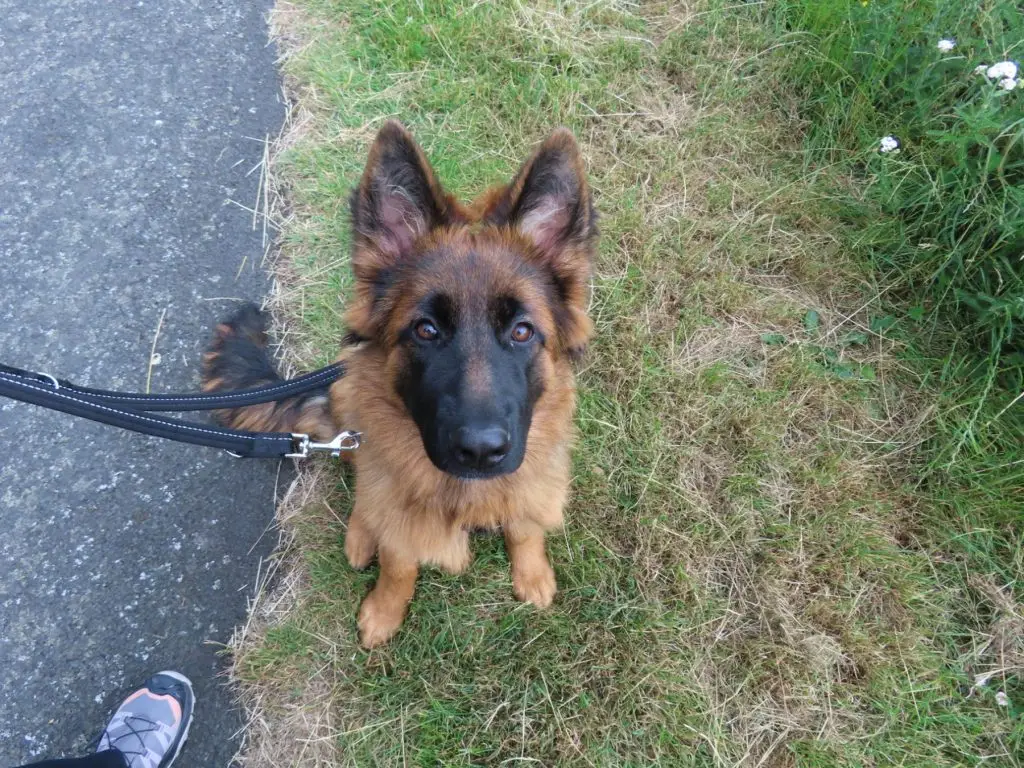
Here’s what tends to happen once the cue starts to stick. You’ll be walking along, something will happen up ahead, and your dog will look at it, then look up at you. You didn’t ask. They just checked.
That’s the point. We’re not after a party trick where your dog stares on command. We’re after a habit: something new happens, and your dog looks up to see what you make of it. Once a dog has been paid enough times for checking in, it becomes their default answer to anything surprising.
Keep paying for it, long after your dog knows the cue. A treat sometimes. Praise other times, or the walk carrying on the way they were hoping to go. Voluntary check-ins are the most useful thing your dog offers you, and they fade if nothing comes of them. Dogs vary a lot in when this starts, and some take longer than others.
Where it usually goes wrong
Four things account for a lot of the wobbles, and not one of them means your dog is being difficult.
Repeating the cue is the big one. Say it once, then wait, even when waiting feels like an age. Say it five times and you teach your dog that “watch” is background noise and the real signal is you getting fed up. If you’ve asked once and got nothing, the situation is too hard. That’s not your dog being stubborn.
Waving food in your dog’s face is the next one. A treat an inch from their nose means they’re watching the treat, and you end up with a dog who follows food rather than one who looks at your face. Keep it up near your eyes.
Then there’s asking for thirty seconds in week one, which sets you both up to fail. And there’s only ever practising in the kitchen. That one’s the sneakiest. Plenty of dogs have a lovely watch at home and nothing outside, because they were never taught it anywhere else. Five short goes in five different places beats fifty in the same spot.
When it falls apart out on the walk
It will, at some point. A dog comes round the corner too close, you ask for a watch, and your dog might as well be deaf. The instinct is to say it louder. Don’t.
Volume doesn’t make a hard situation easier. Distance does. Move away, put a parked car or a hedge or twenty metres between your dog and whatever has grabbed them, and ask again from there. If you get a look, pay it generously and keep moving. If not, you’re still too close, so make more space and try from further back.
FAQs
What age can you start watch command dog training?
Any age. Puppies can start the day they come home, in the kitchen, with something soft and tasty. Older dogs pick it up just as well, and plenty of adult dogs have never been asked to look up before.
Do I need treats forever?
No, though the reward never disappears completely. This is reward-based training, and what changes is the shape of the payment: food early on, then praise, a game, or the walk carrying on the way your dog wanted to go. Keep paying for voluntary check-ins in particular.
How long before it works out on a walk?
It varies a lot. Indoors usually comes together before outdoors, because there’s so much more competing for your dog’s attention outside, and some dogs need a good while longer. That’s not a sign anything’s wrong.
Want a hand with it?
If you’d like someone keeping an eye on your timing while your dog works alongside other dogs, come and train with us and see what’s running at Back To Basics in Sunderland on our classes page. If a group feels like a lot right now because other dogs are the hard part, send us a message and describe what your walks look like, and we’ll say honestly whether a class or a one-to-one is the better place to start.