
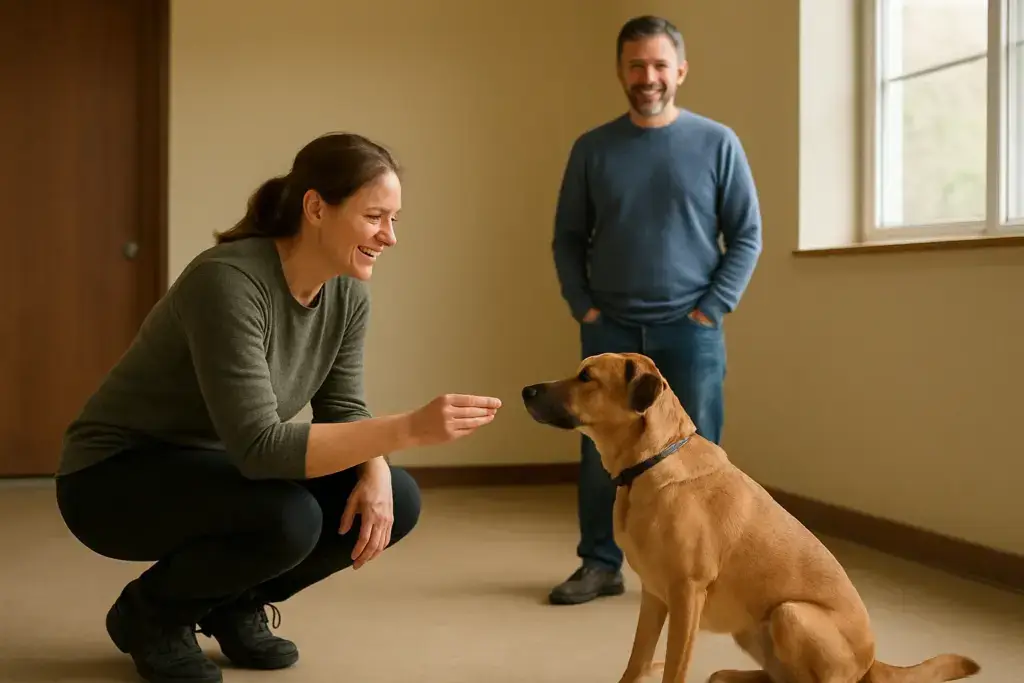
“He seemed lovely on the phone.” That’s usually where the last trainer started too, and it still went wrong. Two trainers can look identical on a website, same warm smile, same promise of force-free methods, same glowing reviews, but dog training in the UK isn’t a regulated profession, so nobody’s checking who actually knows what they’re doing. Knowing how to choose a dog trainer means asking the questions nobody makes you ask, before you hand over the lead.
How to choose a dog trainer when every website says the same thing
Here’s the bit nobody puts on their homepage. The RSPCA says it plainly: anyone can call themselves a dog trainer, even without the knowledge or skills to back it up. There’s a voluntary register run by the Animal Behaviour and Training Council, which the RSPCA points owners towards, but joining it is a choice rather than a requirement. Not being on it doesn’t automatically mean a trainer is poor, so ask about their experience and methods either way. And nothing stops a person printing “reward-based” on a leaflet without it meaning a thing in practice.
That’s not us trying to put you off training altogether. Dogs and owners both do better with proper help, and there are plenty of good trainers out there who genuinely want your dog to do well. It just means the job of telling the good ones from the confident-sounding ones falls to you, standing in your kitchen with a worried dog and five browser tabs open, and a website full of stock photos won’t do that work for you. What follows are the questions to ask a dog trainer before you book a single session, and the answers that should worry you.
What do you do when my dog gets it wrong?
This is the question that tells you the most in the fewest words, and it’s worth asking before you book anything. A trainer who answers well will talk about making the next attempt easier: breaking the step down, upping the value of the reward, going back a stage until your dog’s winning again. Say your dog won’t sit in a busy hallway, a good answer moves the exercise somewhere quieter for a week, not straight back to the same hard spot with more pressure. That’s reward-based training in practice, not just a phrase on a website.
Listen for the answer that should worry you. Anything about firm corrections used as punishment, a raised voice on purpose, a sharp pop on the lead, or the idea that your dog is testing you, is a red flag, however it’s dressed up. A dog getting something wrong usually means the exercise was too hard, too soon, or too distracting, not that they’re being difficult. If a trainer’s fix is anything beyond making it easier and rewarding the try, that tells you what you need to know.
Back To Basics trains reward-based only. We train the owners as much as the dogs, building trust between you and your dog.
What equipment will you put on my dog?
This question sounds technical, but the answer is easy to judge even if you don’t know one type of lead from another. A reassuring answer talks about a flat collar or a well-fitted harness, a long line of five to ten metres for distance work, and treats or a toy to reward with. That’s it. Nothing on that list should ever cause your dog pain or discomfort to work, and a trainer who’s confident in their methods will happily explain why they’ve chosen each piece.
The answer that should end the conversation involves anything that corrects through pain or pressure: a prong or pinch collar with points against the skin, a choke chain, an electric or “e-collar”, or a slip lead used to jerk rather than simply hold. If a trainer reaches for any of that, or tells you it’s “just a training aid”, that’s not a difference of opinion. It’s a different kind of training altogether. The RSPCA is just as direct: don’t join a class if the methods rely on fear, pain, choke chains, shouting or hitting.
If your dog’s already wearing one of these, that’s not a mark against you. Owners can be sold this kit by someone who sounds like they know exactly what they’re doing, because nothing stops that person calling themselves an expert either. The fix is simple: stop using it, and find a reward-based dog trainer instead. Nobody needs to explain themselves for making that change.
Can I watch a class before I book?
A good trainer should say yes to this without a pause. Standing at the edge of a class for twenty minutes tells you more than any website ever could: whether the dogs look relaxed or tense, whether the handler’s voice stays warm under pressure, whether the owners look like they’re having a decent time or gritting their teeth through it.
If a trainer makes excuses, insists you book and pay before you see anything, or only offers a short clip of video they’ve chosen themselves, take that seriously. The RSPCA’s advice is to observe a class without your dog before joining one with them. It’s the one check on this list you can make with your own eyes, rather than take someone’s word for it.
Our own group classes run at Fulwell Methodist Church in Seaburn, 45 minutes a session. If you’d like to know more about how our classes run before you decide, ask us. Ask when you get in touch whether you can watch one first.
What happens if my dog is too much for the group?
Some weeks a dog will be a bit too much for a group: overexcited, worried, reactive to the dog three spaces along. A good trainer should have a plan for that, and it isn’t an embarrassment for anyone involved, whatever it might feel like standing there holding the lead.
Listen for whether the plan is about your dog specifically. That might mean starting further back from the group, working at quieter times, or moving to one-to-one sessions first so your dog can build confidence before joining others. What you don’t want to hear is that every dog gets pushed through the same format regardless, or that your dog simply doesn’t fit, with nothing offered beyond that.
We run 1:1 training at any location, for the training and behaviour issues that group classes can’t focus on, including reactivity and building confidence. It’s not a consolation prize. Building confidence somewhere quieter first is often exactly what gets a dog ready to enjoy a group later, rather than the other way round.
The question that matters most: what are you actually qualified in?
Given that nobody’s policing the title, this is the one question that does the most work, and it’s the one a lot of owners feel awkward asking. Don’t be. A trainer with real experience behind them will usually be glad you asked, because it’s the easiest thing in the world for them to answer.
Listen for specifics: named courses, diplomas, years spent handling dogs professionally, public liability insurance in place. A vague answer, “years of experience” with nothing to point to, or defensiveness at being asked in the first place, tells you plenty on its own. So does the opposite. A trainer who can tell you exactly when they qualified and in what, without having to think about it, has nothing to dress up.
We put ours in writing rather than asking you to take it on trust. Every qualification held by our team, from Home Office dog instructor training through to canine behaviour and anxiety diplomas, is listed on our certification page, so you can check before you ever ring us.
You don’t need to become an expert in dog training to get this right. You just need to know what a good answer sounds like, and be willing to walk away from a bad one.
If your last trainer got it wrong, you’re not overreacting
Some owners looking for a trainer aren’t starting from nothing. They’re starting from a session that left them uneasy, or a dog who’s worse than before they began. If that’s you, the guilt sitting on your shoulders isn’t deserved. You trusted someone who presented themselves as capable, and nothing in the UK stopped them doing that regardless of whether it was true.
Vetting a second trainer properly isn’t being difficult. It’s exactly what should have happened the first time round. Run them through the same five questions above, out loud, on the phone, before you set foot anywhere near a class. A confident, specific answer from someone with nothing to hide should feel noticeably different from what you had before, and that difference is worth trusting.
Finding a dog trainer in the North East, in Sunderland, South Shields or further round Tyne and Wear, starts the same way wherever you are: five questions, not a website. Ask them out loud and listen to what comes back. The answers do the sorting for you.
FAQs
Do I really need to ask all five questions, or is there a shortcut to how to choose a dog trainer?
If you’re short on time, start with what happens when your dog gets it wrong and what equipment they’ll use. Those two tell you the most about how a trainer works. The other three, watching a class, what happens if your dog’s too much, and qualifications, are worth asking before you commit to a course of sessions.
Is it rude to ask a trainer about their qualifications?
No, and any trainer worth booking won’t take it that way. Given that nobody’s required to hold any qualification at all, asking is simply due diligence, the same as you’d do choosing anyone else who’s going to spend time with your dog.
What if a trainer has years of experience but no formal qualifications?
Hands-on experience counts for something, but it should still hold up under the other questions. Ask what specifically they’ve handled, listen to how they answer about corrections and equipment, and treat vague confidence with more caution than a trainer who can point to something concrete.
How long should it take before I see a difference?
It varies hugely by dog, by issue, and by how consistent the practice is at home, so be wary of anyone who promises a number of weeks upfront. Some owners notice a change quickly, others take longer, and a trainer being honest about that uncertainty is a good sign, not a weak one.
Can I switch trainers partway through if it doesn’t feel right?
Yes. If a trainer doesn’t sit right with you or your dog, it’s fine to stop and look elsewhere, and a good trainer would rather you were comfortable elsewhere than staying out of politeness.
Ask us the same five questions
Run any trainer you’re weighing up through the questions above. Us included. That’s really the whole of how to choose a dog trainer: not one big decision, but five small ones you can check for yourself before you book anything. Our group classes run from Puppy Foundation through Intermediate to Advanced, and the weekly timetable is on the services page. If you’d rather talk it through first, send us a message and tell us what’s going on with your dog, then put that list to us while you’re at it.